Sony FX3: Why Filmmakers Still Trust It and What Sony FX3 II Could Bring
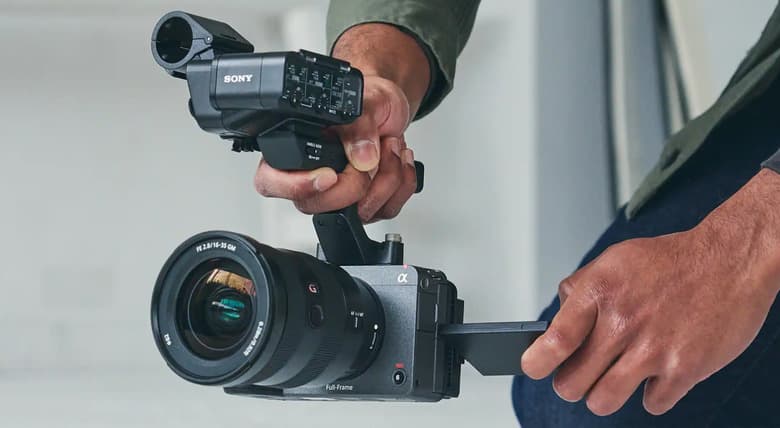
The Sony FX3 has emerged as one of the most practical tiny cinema cameras for independent filmmakers, documentary makers, and hybrid content developers. Sony launched the camera as part of its Cinema Line, slotting it in between the company's high-end professional movie-making cameras and its more economical full-frame options.
More than four years after its release, the FX3 remains important in production situations around the world. However, new regulatory filings originating from China have rekindled discussions regarding a possible successor, popularly believed to be the Sony FX3 II.
This GadgetXpedia guide takes an educational look at the FX3, explains why it remains popular in 2026, and explores what the recent registrations could suggest about Sony's future ambitions.
Why the Sony FX3 Became a Filmmaker Favorite ?
Designed for mobility, the FX3 is a departure from standard cinema cameras that often require expensive rigs and larger teams.
Its small body appealed to creators who wanted professional-quality film without hauling heavy equipment. Its flexibility was quickly adopted by wedding videographers, travel creators, documentary filmmakers and solo operators.
Why was it popular? Several things.
- Full-frame picture quality,
- Advanced autofocus capabilities,
- Compact and lightweight construction,
- Good low light performance,
- Active cooling for long duration recordings
- Compatible with Sony’s E-mount ecosystem.
These characteristics give producers the flexibility to move smoothly between handheld, gimbal, and studio scenarios.
New Registrations Point to a Sony FX3 II
Interest surrounding a successor escalated following news of a newly registered Sony camera model in Chinese certification databases.
Industry experts also noted that the registration carried the ILME-FX designation, a naming practice that dates back to Sony’s Cinema Line devices.
Examples from the past include:
| Model Prefix | Camera Series |
| ILME-FX3 | Sony FX3 |
| ILME-FX6 | Sony FX6 |
| ILME-FX30 | Sony FX30 |
With this pattern, many analysts believe the newly registered model could be the long-rumored Sony FX3 II.
Sony has not officially acknowledged the product, although regulatory files often appear months before announcements.
What the Registration Information Tells Us
Some interesting observations can be seen in numerous certification trackers.
Wi-Fi 6 ready
The newly registered Cinema Line model is said to enable Wi-Fi 6.
And here’s how filmmakers could profit from better wireless capabilities:
- File transmits faster,
- More reliable remote monitoring,
- Improved streaming performance,
- Better mobile workflows.
Connectivity upgrades are of greater importance with the rise of cloud collaboration and remote operations in production.
Potential Battery Changes
The registered battery is also said to be Sony’s newer NP-SA100 variant, reports said.
- If true, this could result in:
- Longer recording times,
- Better electricity efficiency,
- Support for high performance hardware.
Sony has yet to provide an official statement and it is still unknown if it will work with existing FX3 accessories.
USB-C Power Delivery Support
The certification data show that it supports 30W USB-C Power Delivery charging.
This functionality could help designers with on-location processes by letting them use modern power banks and charging accessories.
What Filmmakers Want to Improve?
Despite the Sony FX3’s impressive capabilities, pros still see room for growth in a future model.
Some general improvements that are discussed include:
Faster sensor readouts
Filmmakers filming fast-moving scenes nevertheless want to reduce rolling shutter effects.
Improved Autofocus Performance
Sony’s focusing isn’t bad already, but with a bit more improvement the tracking may be more consistent.
Additional Recording Options
More codecs and frame-rate flexibility would give more creative latitude in post-production.
Display Improvements
Enhanced LCD visibility and interface upgrades would be a welcome improvement for creators working in the field or in tough situations.
These are just options until Sony makes a formal announcement of a successor.
Sony's 2026 Camera Strategy Broadens
It looks like Sony may be prepping for a few launches in 2026 with recent certifications.
The industry timelines now are:
- February 2026: Sony A7R VI becomes registered.
- April 2026: ILME-FX model is registered.
- Late 2026: Possible announcement windows ahead of significant industry events.
While release plans are subject to change, these sign-ups indicate that Sony is still pumping a lot of money in both the photography and cinema areas.
Is the Sony FX3 Still a Good Option?
With the mounting buzz of a prospective replacement, the FX3 is still quite relevant.
The portability combined with professional features means the camera can still handle the needs of a great many production settings.
It remains especially good for:
- Documentary film making,
- Commercial video production
- Weddings and Events
- Filming travel,
- Producing material for the web,
- Film projects, independent.
The FX3 still holds up as a solid performer for today’s creators in need of a proven full-frame cinema solution.
Concluding Thoughts
The Sony FX3 has become one of the most influential tiny cinema cameras in recent years. Its practical design, stunning image quality and creator-first mindset helped redefine what portable filmmaking tools could be.
Meanwhile, recent certification action has been rumour-mongering around the Sony FX3 II, implying Sony would be soon refreshing one of its most successful Cinema Line products.
Many details are still to be confirmed, but filmmakers can interpret these advancements as part of Sony's ongoing efforts to improve professional video workflows and respond to changing production needs.
For more camera news, filmmaking tips and unbiased technology coverage, keep in touch with GadgetXpedia.